The world is changing. This is always true, and it is often beautiful. Global access to information, technology, and all kinds of resources has raised the quality of life for millions. But along with this globalization comes a certain amount of cultural erosion—the exchange of media and ideas happens so fast that cultures begin to look more and more similar; some of their distinctiveness starts to fade.
But this line of thinking can go too far when it paints unique traditions as the last gasp of something beautiful being gradually replaced by a homogenous, global identity.
Don’t fall for it! Culture is not an artifact; it’s an organism. A living thing that grows and adapts to ever-changing circumstances. And human creativity continues to preserve and re-invent the unique elements of culture against impressive odds.
We are privileged to watch, with wide-eyed wonder, the creativity expressed in each of the countries where our teachers work. It is a window into the history and uniqueness of each culture. What better way to introduce you to our newest partner country, Kazakhstan, than to explore one of their most fascinating and long-standing traditions?
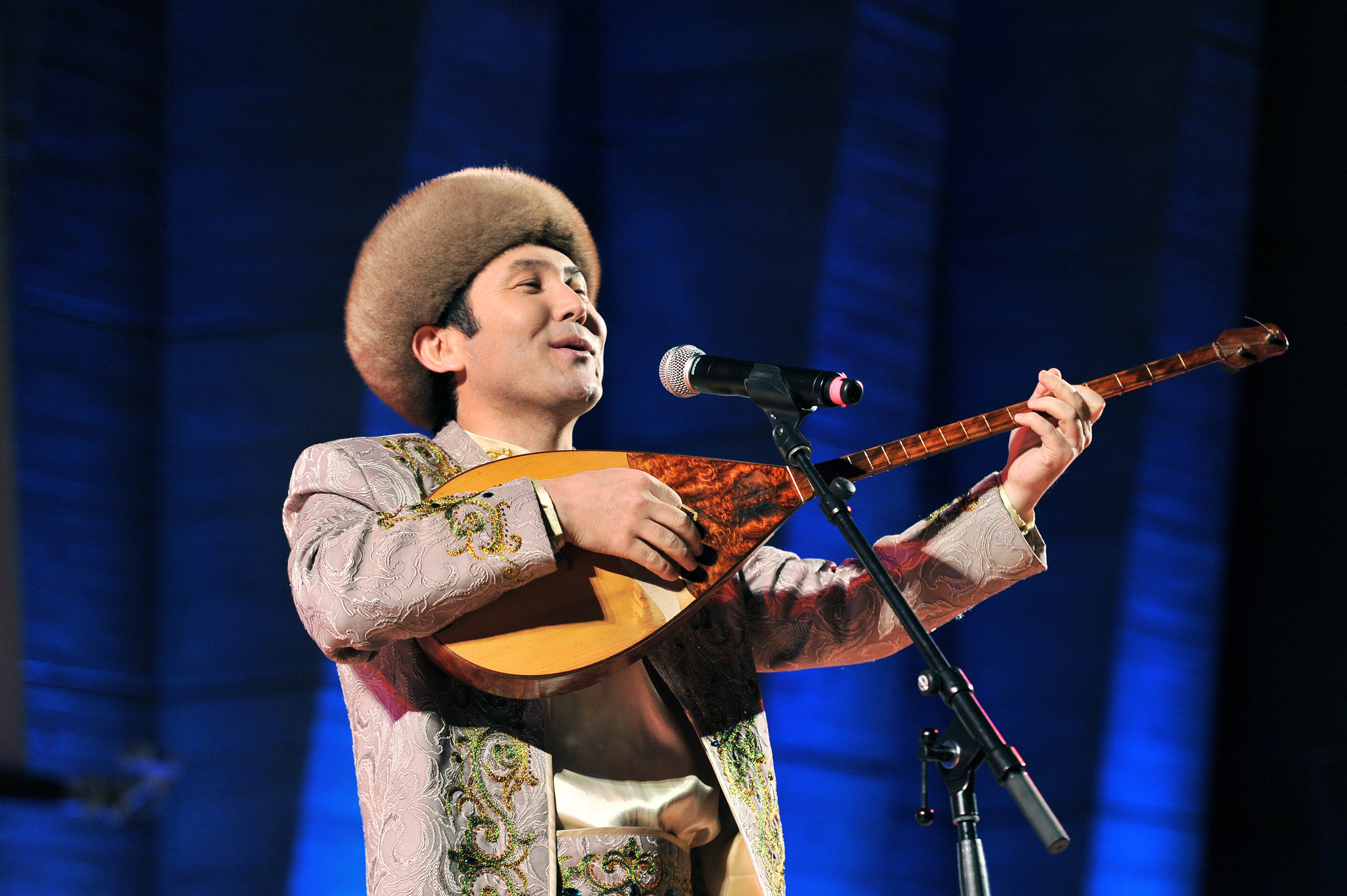
Introducing Aitys: the debate-style, musical, improv poetry tradition that has both adapted to and shaped modern Kazakh identity through generations.
Aitys includes two musician-poets (called akyns) in a competitive dialogue, improvising both their poetry and accompaniment on a two-stringed instrument called a dombra. This is a community event, and the audience determines the winner, with the contest going on until one akyn has clearly convinced the crowd of their stronger arguments, better musical and poetic style, and funnier jokes.2 You can see the akyns' skill and the crowd's response in this video:
In a nomadic culture, this oral tradition was a portable form of artistic expression that helped establish a connection to place. It also served as a kind of “folk journalism” and a way to document history and collective knowledge.2 But when it comes to shaping and preserving culture, one of its most important functions has been the two-way communication between the nation’s populace and its leadership. Since the audience determines the winner, the outcome of Aitys competitions represents the voice of the people. At the same time, the performances can communicate information and ideas from the government to a wide audience, which can have a significant influence on public thinking.2
At its best, Aitys is a beautiful mediator, but at its worst, it has been used as a tool of manipulation. During the Soviet era in Kazakhstan, the Soviet Union used these performances as avenues for their ideology, but Aitys had just the right elements to preserve Kazakh culture. The Soviet government valued its potential for propaganda (and to some extent, it achieved those objectives). But the improvised and poetic nature of the events was a built-in defense against this, allowing akyns to slip subtle criticism and traditional ideas into their arguments. It was a way for the Kazakh people to hold onto the identity that those in power were actively working to remove.3
This ability to offer social critique has always been an important element of Aitys, and it continues to be a factor that shapes the culture as it evolves over time.1 The role of debating poet was originally reserved for men, but female akyns have joined the ranks, challenging the cultural perception of their traditional roles and advocating for education and individual liberties for women.2
Now, as the fast-moving internet homogenizes some of our global experience, it is also a tool for this ancient tradition to find a modern expression. Online and asynchronous Aitys competitions are becoming more common and introducing new people from all around the world to this historic art form.
In a time when it’s easy to be cynical, there is so much hope in the story of how Aitys has adapted to a changing cultural landscape. From its nomadic roots, through the Soviet era, and into the globalizing age of the internet, akyns have preserved the beautiful distinctiveness of Kazakh culture through their art.
The unique aspects of different cultures also shows us what we have in common. The impulse to make art, expressed in a million different ways, unites us as humans. It is such a joy for our teachers to live and work in cross-cultural community, where they get to experience this diverse and varied creativity firsthand.
If you’re interested in what working overseas could look like for you, explore short-term and long-term options here!
Sources:
1 Kyzy, Akylai O., and Assem Kalkamanova. 2024. “Aitys(h) as a Form of Civic Activism in Kazakhstan and Kyrgyzstan.” The Oxus Society for Central Asian Affairs, (April). http://oxussociety.org/publications/aitysh-as-a-form-of-civic-activism/.
2 Shatayeva, Lyazzat. 2017. “Aitys: Gem of Kazakh Spoken Literary Tradition, Platform for Human Rights.” The Astana Times, January 6, 2017. https://astanatimes.com/2017/01/aitys-gem-of-kazakh-spoken-literary-tradition-platform-for-human-rights/.
3 Yerlanova, Ayaulym, Muhabbat Baratova, Bakytzhan Kadyrova, Maigul Orazkhanova, and Adilbek Amrenov. 2025. “Aitys as a Cultural Phenomenon: Historical Development and Contemporary Significance for Kazakhstan.” Forum for Linguistic Studies 07, no. 03 (March): 863-873. https://doi.org/10.30564/fls.v7i3.8596.
-3.jpg)

.jpg)